Too Many Options, Not Enough Connection: The Hidden Cost of Hyper-Connected Dating

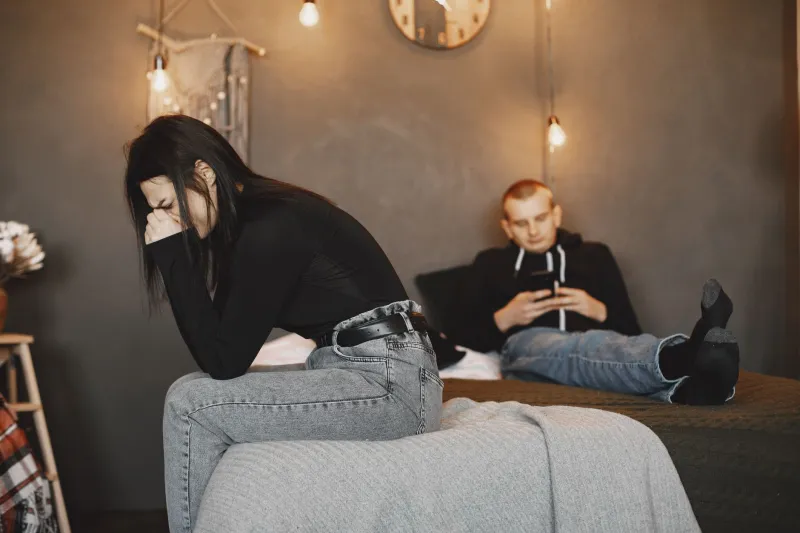
Picture this: you're lying in bed on a Tuesday night, phone in hand, swiping through a seemingly infinite gallery of potential partners. You've got three conversations going on two different apps, a situationship that's been "almost something" for four months, and a calendar full of first dates that somehow never make it to a second. You are, by every measurable standard, more romantically active than any generation before you.
So why does the bedroom feel so empty?
This isn't a personal failing. It's a structural one — and it's playing out across millions of American households right now.
The Illusion of Abundance
Behavioral economists have a term for what happens when we're confronted with too many choices: decision fatigue. It was famously illustrated by a jam study (yes, jam) at a California grocery store, where shoppers presented with 24 varieties bought far less than those shown only six. The principle scales uncomfortably well to modern dating.
When the pool of potential partners feels infinite, commitment starts to feel irrational. Why invest emotionally in this person when someone theoretically better is three swipes away? Psychologist Barry Schwartz called this the "paradox of choice" — the idea that more options don't make us happier, they make us more anxious, more avoidant, and ultimately less satisfied with whatever we do choose.
Apply that to intimacy, and things get complicated fast. We're not just selecting a partner anymore. We're auditing them against a highlight reel of curated profiles, filtered photos, and carefully workshopped bios. Real people, with their weird laughs and complicated histories and the way they hog the blanket, can't compete with an idealized digital avatar. So we keep scrolling. And the deeper we scroll, the harder genuine connection becomes to recognize — let alone sustain.
When Stimulation Replaces Sensation
Here's another layer: our nervous systems are getting absolutely wrecked.
Constant digital stimulation — the notifications, the dopamine drip of likes and matches, the 24/7 content cycle — has recalibrated what our brains register as interesting or exciting. Neuroscientists studying reward pathways have noted that chronic overstimulation can blunt our response to subtler pleasures. The quiet satisfaction of a slow Sunday morning with someone you genuinely like? That doesn't ping the same reward centers as a new match notification. And over time, we start unconsciously chasing the ping.
The result is a generation of people who are technically more "connected" than any humans in history, yet reporting lower rates of sexual frequency, satisfaction, and emotional intimacy than their parents did at the same age. The data on this is pretty sobering — multiple large-scale surveys, including the General Social Survey, have documented a sustained decline in sexual activity among American adults under 40 over the past decade and a half.
We're stimulated. We're not satisfied. Those are very different things.
The Performance Problem
Social media adds another wrinkle that doesn't get talked about enough: the performance of desire versus the actual experience of it.
When intimacy becomes content — when couples post their "soft life" aesthetics, their anniversary trips, their matching pajama sets — sex and romance get folded into personal branding. And personal branding, by definition, is about managing perception. That's the opposite of vulnerability. That's the opposite of the raw, slightly awkward, genuinely human experience of physical closeness with another person.
For people who've spent years performing a version of themselves online, dropping that performance in the bedroom can feel genuinely terrifying. Authentic desire requires you to stop curating and just be — and that muscle, for a lot of us, has atrophied from disuse.
Rebuilding the Signal Through the Noise
None of this means you need to delete your apps and move off the grid. But it does mean that intentional, deliberate intimate wellness practices have become more important — not less — in a hyper-connected world.
A few things that actually help:
Reconnect with your own body first. One of the quietest casualties of the digital dating cycle is self-knowledge. When we're constantly focused outward — on how we're perceived, on who's available, on what someone else might want — we lose touch with what we actually feel and desire. Solo intimate exploration isn't just a stopgap between partners. It's a foundational wellness practice. Understanding your own responses, your own rhythms, your own preferences makes you a more present and authentic partner to anyone you eventually let in.
Create tech-free intimate space. This sounds almost embarrassingly simple, but the research on phone use in the bedroom is genuinely alarming. Blue light disrupts sleep. Notifications fracture attention. And the constant availability of something more stimulating than the person next to you is quietly corrosive to physical intimacy. Phones out of the bedroom — or at minimum, on airplane mode — isn't a relationship hack. It's basic maintenance.
Slow down the consumption cycle. If you're dating, consider what happens when you deliberately limit your swiping sessions. Give yourself permission to actually invest in a conversation before moving on. The scarcity you artificially create can paradoxically make individual connections feel more meaningful — because you're allocating actual attention to them.
Use intimate products as tools for presence, not distraction. Quality intimate wellness products — whether you're flying solo or with a partner — can function as anchors to the present moment. The tactile, embodied experience of physical pleasure is one of the most effective interruptions to the dissociative scroll-brain state most of us spend our days in. It brings you back into your body. That's not trivial. That's medicine.
The Connection You're Actually Looking For
Here's the thing nobody in the tech industry wants you to internalize: the connection you're craving isn't available as an app feature. It can't be unlocked with a premium subscription or delivered via algorithm. It lives in the unglamorous, unfiltered, occasionally uncomfortable territory of real physical and emotional presence.
The good news is that territory is still accessible. It just requires you to put the phone down, tune out the noise, and actually show up — for yourself first, and then for the people worth showing up for.
The bedroom isn't broken. It's just been competing with a lot of very loud distractions. You get to decide what deserves your attention.
And if you need a little help getting back in touch with what feels good? Well. That's exactly what we're here for.