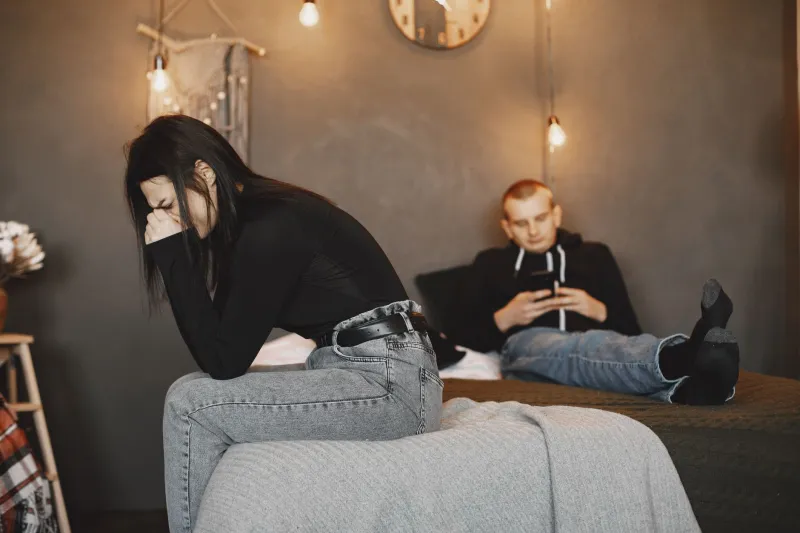
Swiped Out: How the Always-On Digital World Is Quietly Killing Our Bedroom Confidence
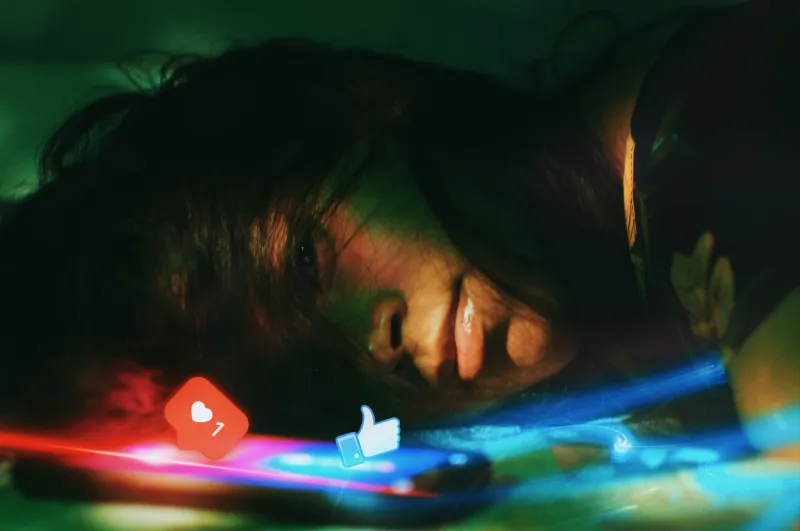
There's a strange irony living rent-free in the heads of a lot of Americans right now. We carry supercomputers in our pockets that can connect us to billions of people in seconds. We have dating apps that algorithmically surface potential partners within a five-mile radius. We have entire social media ecosystems built around the performance of desirability. And yet — a growing number of us feel profoundly disconnected from our own bodies, our own desire, and the people we're actually trying to get close to.
Welcome to the pleasure paradox.
The Scroll That Stole Your Libido
Let's start with the obvious culprit: the phone. Not because screens are inherently evil, but because of what we're doing on them and how it's reshaping the way we understand intimacy.
Social media has turned sexuality into a performance sport. Carefully lit thirst traps, algorithmically boosted relationship content, and the constant visual parade of other people's apparent desirability have created a baseline of comparison that's almost impossible to escape. Research from the American Psychological Association has repeatedly linked heavy social media use to increased body dissatisfaction and lower self-esteem — two things that don't exactly prime the pump for confident, present, pleasurable sex.
When you spend hours a day consuming a highlight reel of other people's bodies and relationships, your own private, imperfect, beautifully human experience starts to feel like it doesn't measure up. And nothing shuts down authentic desire faster than the feeling that you're doing it wrong.
Dating Apps and the Paradox of Infinite Choice
Here's another wrinkle: dating apps promised us more connection, but for a lot of users, they've delivered something closer to decision fatigue with a side of emotional numbness.
Psychologists call it the paradox of choice. When options feel infinite, we become worse — not better — at choosing and committing. We swipe through faces the way we scroll through Netflix, convinced something better is always one thumb-flick away. The result is a generation of people who are technically "dating" but rarely arriving at the kind of sustained, vulnerable, in-person intimacy that actually feels good.
There's also the dehumanization problem. Reducing potential partners to a photo and a bio trains the brain to assess people as products. And when people feel like products, real desire — the messy, uncertain, deeply personal kind — gets harder to access.
Performative Sexuality vs. the Real Thing
Then there's the pressure to perform.
Online culture has created a very specific script for what sexuality is supposed to look like: confident, polished, effortless, and always vaguely cinematic. It's a script that has almost nothing to do with actual human desire, which is frequently awkward, uncertain, context-dependent, and deeply tied to emotional safety.
When people internalize that script — and most of us do, whether we realize it or not — real intimacy starts to feel like an audition. Am I doing this right? Do I look okay? Is this what they expected? Those questions are the enemies of presence, and presence is the whole ballgame when it comes to genuine physical connection.
This is especially true for women and femme-presenting people, who face a uniquely impossible standard: be desirable but not too eager, sexually confident but not intimidating, enthusiastic but not performative. It's exhausting. And exhaustion is not an aphrodisiac.
What Gets Lost When Everything Is Curated
Authentic desire lives in the unscripted moments. It lives in vulnerability, in the willingness to be seen without a filter, in the small honest signals that pass between people who are genuinely present with each other.
All of that requires something the digital world actively discourages: slowness. Uncertainty. The willingness to not know exactly how something is going to go.
When we're conditioned to expect instant feedback, constant stimulation, and frictionless experience, the natural rhythms of real intimacy start to feel uncomfortable. The silence before a kiss. The conversation that has to happen before bodies get involved. The process of actually learning what another person — or your own body — responds to. None of that is fast. None of it is frictionless. And all of it is essential.
Reclaiming Your Desire in an Oversaturated World
So what do you actually do with all of this?
First: log off more than you think you need to. Not forever, not dramatically — just enough to create some genuine quiet in your nervous system. Desire has a hard time surfacing through the noise of constant stimulation. Give it some space.
Second: get reacquainted with your own body on your own terms. Solo pleasure isn't a consolation prize — it's a legitimate practice for understanding what you actually want, separate from what you think you're supposed to want. Whether that means taking a long bath, investing in a quality intimate product, or simply spending time noticing what feels good without any audience or expectation, the relationship you have with your own desire is the foundation everything else is built on.
Third: give yourself permission to be bad at this for a while. The pressure to be seamlessly sexual is one of the biggest barriers to actually feeling good. Real intimacy is allowed to be awkward. It's allowed to be a conversation. It's allowed to be a work in progress.
Fourth: consider whether the digital inputs you're consuming are serving your sense of self or quietly undermining it. A social media audit isn't the sexiest suggestion, but if your feed is consistently making you feel worse about your body or your love life, that's data worth acting on.
The Intimacy You Actually Deserve
Here's the truth that gets buried under all the noise: you don't need to perform desire. You don't need to curate it, optimize it, or make it look good for anyone. You just need to feel it — and that starts with creating the internal and external conditions that let it breathe.
The digital world isn't going anywhere, and honestly, it's not all bad. But it's worth being honest about the ways it's gotten between us and the kind of physical, emotional, embodied connection that actually makes us feel alive.
You deserve intimacy that's real. Pleasure that's yours. A body you feel at home in. None of that is available for download — but all of it is absolutely within reach.